Starting Therapy: What to Expect
-
Reflect
Take a moment to sit with yourself. What's bringing me here now? What would feel different if things shifted? You don't need all the answers — just a sense of what you're hoping to work through, and what kind of support might help you get there.
-
Reach Out
Once you're ready, send an inquiry through the website if you’re ready to schedule your first appointment, or ask any questions via email. It will be helpful to be ready to share your insurance provider and general availability. You’re almost there.
-
Complete Paperwork
After the fit feels right, you'll schedule your first session. Completing intake paperwork and consent forms will take about 15 minutes. Plan ahead so you can complete and submit everything 3 days before your scheduled appointment.

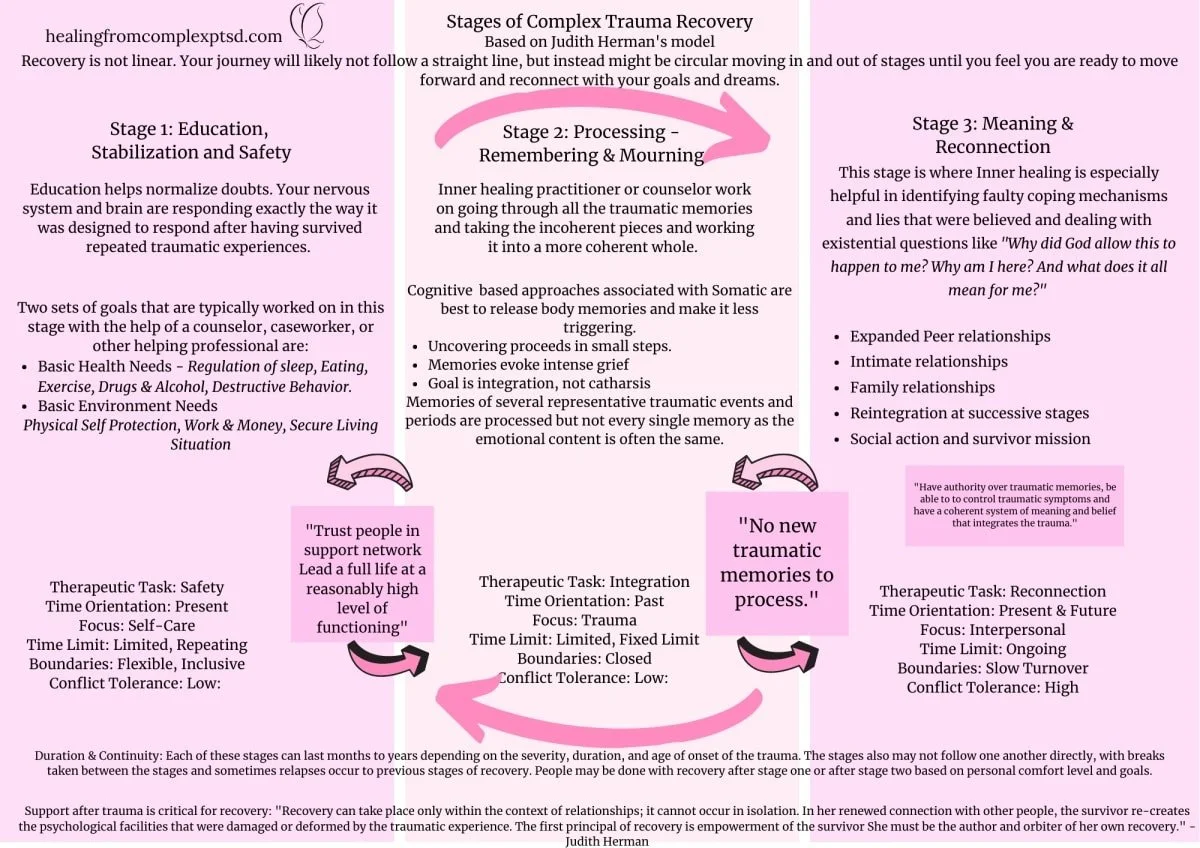
Recovery is not linear. Your healing and self-discovery will instead look more circular, vacillating in and out, three steps forward and two steps back. A Japanese proverb captures this (ame futte ji katamaru), the literal translation being something like “the rain falls and the ground hardens”, figuratively it means that what appears like adversity may actually be most helpful and needed. What feels like regression is meaningful, what feels like progress is fleeting, both come and go, come and go. Through that process we are graced with self-knowledge, compassion, and actualization.
- Elisha Geers
Stages of Complex Trauma Recovery
(based on Judith Herman’s model)
“We heal in connection—with ourselves, others, and the world around us”