Supervision built for
intentional growth.
A trauma-informed, Deliberate Practice approach to supervision — helping both new and seasoned therapists develop and hone clinical skills, professional identity, and a sustainable practice.
Qualifications and Approach
Master of Social Work (MSW)
Practice and approach to supervision is rooted in advancing the well-being of vulnerable populations, challenging systemic inequality, and upholding the highest ethical standards. Graduated with a Master of Social Work from the Brown School at Washington University in Saint Louis with a focus on global mental health and treatment with LGBTQ+ populations. Practice in accordance with NASW Code of Ethics.
Integrative Trauma-Centered Approach
Expertise in helping clients with pervasive shame, attachment difficulties, avoidance, resistance, affect dysregulation, dissociation, and achieving whole-self integration. Clinical supervision attends to the therapist's own nervous system and window of tolerance. Countertransference, vicarious trauma, and clinician well-being are integrated into the work. EMDRIA-certified therapist and consultant-in-training.
Culturally Informed Care
Supervision draws on direct clinical experience working with BIPOC and AAPI communities, intergenerational trauma, cultural identity, and adult survivors of complex trauma. Cross-cultural clinical work and AAPI-specific treatment considerations are areas of direct expertise. Supervisees working with diverse populations will find particular depth here.
Deliberate Practice
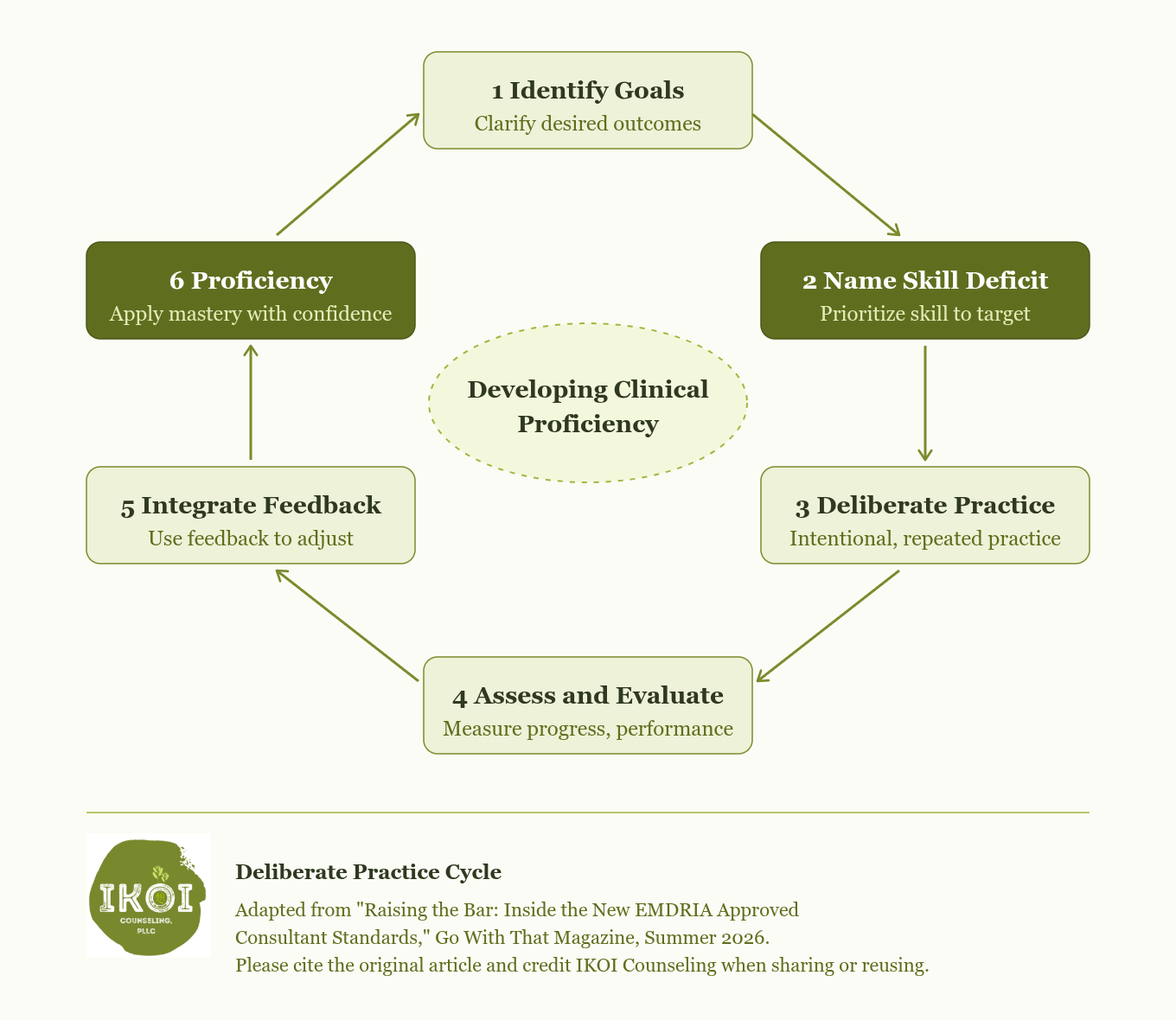
Supervision with Elisha looks like targeted, feedback-rich skill-building over time. Supervision will follow the PDCA cycle (Plan, Do, Check, Act), identify specific areas of growth, create opportunity to practice deliberately, humbly, and with willingness, and track progress. The supervisory relationship holds both the supervisee's development and the welfare of clients simultaneously. Resident at a year-long, skills-based Clinical Supervisor Training program through Sentio University and working towards DP Coach Certification from the International Deliberate Practice Society. Learn more about Deliberate Practice here.
Washington State Based
Licensed in good standing; eligible to supervise per WAC 246-809-334


“Developing a sustained practice of self-reflection is one of the most effective strategies for noticing and understanding countertransference and requires therapists to study themselves with the same depth and curiosity they bring to their clients.”